Introduction
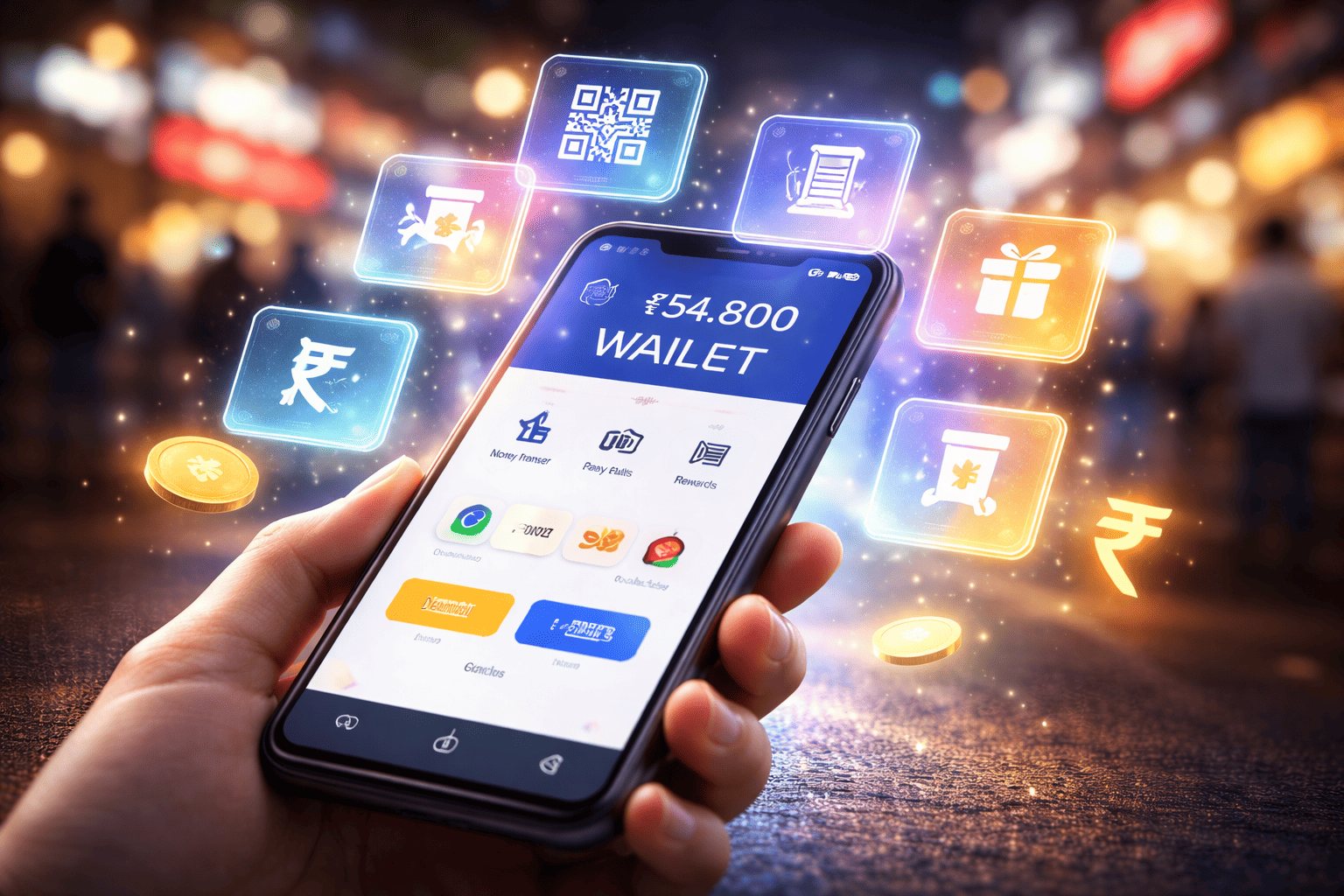
Digital wallets in India 2026 are transforming India into a fast-growing cashless nation by enabling instant UPI payments, QR transactions, and secure mobile transfers.
India is rapidly becoming a cashless nation, but many people still face problems like slow bank transfers, long queues at payment counters, and confusion while handling multiple payment apps. From paying local vendors to online shopping and bill payments, users now expect fast, simple, and secure digital payments without delays or hidden charges.
In 2026, digital wallets have emerged as one of the most popular financial tools across India. Backed by regulatory guidance from the Reserve Bank of India (RBI) and powered by payment infrastructure developed by NPCI such as UPI, RuPay, and IMPS, these wallets offer safe and reliable cashless transactions for everyday use.
Digital wallets allow users to store money, pay instantly using QR codes, send and receive funds, and manage bills directly from their smartphones. The growing curiosity around instant payments, reward points, and attractive cashback offers is driving millions of Indians to shift from traditional cash handling to smart wallet-based transactions.
With increasing smartphone usage and rising online services, digital wallets are becoming an essential part of daily financial life in India.
What are Digital Wallets in India?
Digital wallets in India are mobile-based payment applications that allow users to store money electronically and make cashless payments directly from their smartphones. Instead of carrying physical cash or debit cards, users can pay for shopping, travel, bills, recharges, and online services using QR codes, mobile numbers, or UPI IDs.
These wallets operate under guidelines issued by the Reserve Bank of India (RBI) and use payment systems developed by NPCI (National Payments Corporation of India) such as UPI, IMPS, and RuPay. This regulatory support ensures secure transactions, proper user verification, and data protection across all wallet platforms.
In simple words, a digital wallet works like a virtual purse inside your phone. You add money from your bank account, and then use that balance to pay instantly anywhere that accepts digital payments.
What Digital Wallets Can Do
- Store money digitally for daily spending
- Make instant UPI and QR code payments
- Pay electricity, mobile, broadband, gas, and water bills
- Do mobile and DTH recharges
- Send and receive money with contacts
- Book tickets, shop online, and pay subscriptions
- Offer cashback, rewards, and discount coupons
- Show transaction history and spending records
Who Should Use Digital Wallets?
Digital wallets are useful for almost every Indian smartphone user:
- Students paying fees, food bills, and travel expenses
- Working professionals managing daily payments and subscriptions
- Small shop owners accepting QR code payments
- Online shoppers looking for faster checkout options
- Freelancers receiving payments instantly
- Homemakers managing household expenses digitally
- Senior citizens making bill payments without visiting banks
- Rural and semi-urban users accessing basic digital banking services
By reducing cash dependency and offering secure instant payments, digital wallets are making everyday financial transactions faster, simpler, and more convenient across India.
Active crypto users can also benefit from crypto price monitoring tools USA 2026 to track market movements in real time.
Who Should NOT Use Digital Wallets in India
Digital wallets are convenient, but they may not be suitable for everyone. People who are not comfortable using smartphones or mobile apps may find digital wallets confusing and difficult to manage. Without basic digital skills, there is a higher chance of making payment mistakes or falling for online fraud attempts.
Users who do not have stable internet access may also face failed transactions, delayed payments, or incomplete recharges, which can cause frustration. Digital wallets depend heavily on continuous connectivity for smooth operation.
Individuals who strongly prefer face-to-face banking services, physical cash handling, and paper receipts may feel uncomfortable relying fully on digital platforms. Similarly, people who frequently forget PINs, passwords, or mobile verification steps may struggle with wallet security requirements.
For such users, traditional banking and cash-based transactions may still provide more confidence, comfort, and control over daily financial activities.
Key Features of Digital Wallets in India
Instant UPI Payments
- Enable instant transfer of money using UPI IDs, mobile numbers, and QR codes
- Works 24/7, including weekends and bank holidays
- Ideal for local shops, online shopping, rent, and utility bills
- Reduces dependency on physical cash
Secure Wallet Storage
- Provides a secure wallet to store digital money safely
- Uses encryption, OTP, and PIN-based verification
- Allows quick blocking of wallet access in case of phone loss
- Keeps transaction history and balances protected
Zero Charges and Low Fees
- Most daily payments are available with zero charges
- No extra fees for UPI transfers and QR payments
- Helps users save money on frequent transactions
- Makes wallets affordable for students and small earners
Bill Payments and Recharges
- Pay electricity, gas, water, mobile, broadband, and DTH bills
- Offers instant confirmation and payment receipts
- Sends bill due-date reminders
- Prevents late payment penalties
Cashback and Reward Programs
- Offers cashback on recharges, shopping, and payments
- Provides discount coupons and loyalty rewards
- Helps users save money while spending digitally
Digital Banking Services
- Supports mini statements and balance checks
- Allows linking of multiple bank accounts
- Makes money management simple from one app
Subscription and Ticket Payments
- Pay OTT subscriptions, gym fees, and insurance premiums
- Book travel tickets, movies, and event passes
- Enables faster checkout without card details
Merchant Payment Solutions
- Offers QR code payment acceptance for shopkeepers
- Provides daily sales and transaction summaries
- Helps small businesses manage digital collections
Expense Tracking and Alerts
- Tracks daily spending automatically
- Sends real-time alerts for every transaction
- Helps control unnecessary expenses
Security, Privacy & Legal Compliance of Digital Wallets in India
Digital wallets in India operate under strict regulatory supervision to ensure user safety, data protection, and legal compliance. The Reserve Bank of India (RBI) issues guidelines that wallet providers must follow for licensing, transaction limits, customer verification, and data handling practices. These rules help maintain transparency and protect users from misuse or financial risks.
Most digital wallets require KYC (Know Your Customer) verification using Aadhaar, PAN, or other valid identity documents. KYC ensures that each wallet account is linked to a verified user, reducing identity fraud, money laundering, and unauthorized access.
To protect sensitive financial data, digital wallet platforms use advanced encryption technology. All transactions, login credentials, and personal details are secured through encrypted channels, preventing third parties from intercepting or misusing user information.
For fraud protection, wallets apply multi-factor authentication such as OTP, PIN, and device-based verification. Real-time transaction alerts notify users instantly about every payment, helping them quickly identify suspicious activity. Most wallets also provide quick account blocking and customer support access in case of phone loss or fraudulent transactions.
Wallets that support UPI and card payments follow security frameworks set by NPCI and RBI. These combined safeguards make digital wallets reliable, compliant, and safe for everyday cashless transactions across India.
These wallets follow RBI digital payment guidelines issued by the Reserve Bank of India (RBI).
How Digital Wallets Work in India
Digital wallets simplify everyday payments by turning a smartphone into a full-time payment tool. Here is how they are used in real life across India:
Step 1: App Download and Registration
A user downloads a digital wallet app from the app store and registers using a mobile number. The number is verified through OTP, and basic profile details are added to activate the wallet account.
Step 2: KYC Verification
To unlock full features, the user completes KYC verification using Aadhaar, PAN, or other valid documents. This step increases wallet limits and allows access to advanced payment services.
Step 3: Linking Bank Account or Adding Money
The wallet is linked to a bank account through UPI or users can add money using debit cards, net banking, or UPI transfers. This balance becomes the digital cash used for daily payments.
Step 4: Making Instant Payments
For shopping at local stores, users simply scan a QR code and enter the payment amount. For online payments, they select the wallet at checkout. The transaction is completed instantly and both sender and receiver receive confirmation.
Step 5: Paying Bills and Recharges
Users can pay electricity, gas, water, mobile, broadband, and DTH bills directly from the wallet. The app stores biller details and sends reminders to avoid late fees.
Step 6: Sending and Receiving Money
Money can be sent to friends and family using mobile numbers or UPI IDs. The receiver gets funds instantly without sharing bank details.
Step 7: Cashback and Reward Tracking
After payments, users can see cashback, reward points, and discount coupons applied automatically. These benefits are stored in the wallet for future use.
Step 8: Monitoring Spending
Every transaction is recorded in the wallet. Users can view spending history, download receipts, and track monthly expenses for better money management.
Through these simple steps, digital wallets make cashless payments fast, secure, and convenient across India.
Pricing, Fees & Limits of Digital Wallets in India
Digital wallets in India are popular mainly because they offer affordable and transparent cashless payment services. Most everyday transactions are either free or charged at very low rates. However, users should note that pricing may change depending on RBI guidelines, NPCI updates, and individual wallet company policies.
For regular UPI payments, QR code merchant payments, and person-to-person money transfers, most wallets offer zero charges. This makes them ideal for daily expenses such as groceries, travel fares, rent payments, and bill settlements. Mobile recharges, utility bill payments, and subscription payments are also generally free of service charges.
Wallet balance loading through UPI or net banking is mostly free, while adding money using debit or credit cards may sometimes include small processing fees. These charges vary from platform to platform and may change over time.
Common Charges and Costs
- Card-based wallet loading fees: Small convenience fees may apply
- International transactions: Currency conversion and cross-border usage may include extra charges
- ATM withdrawals: Some wallets offer limited free withdrawals, after which nominal fees apply
- Premium subscriptions: Advanced features like credit monitoring or insurance services may require paid plans
- Merchant services: Business accounts may include platform service fees
Wallet Usage Limits
RBI defines wallet limits based on KYC status:
- Minimum KYC wallets: Limited monthly loading and spending caps
- Full KYC wallets: Higher balance and transaction limits for regular users
- UPI-linked wallets: Allow higher transfer limits based on bank-linked policies
Because wallet rules are regulated, limits and charges can be revised by RBI or wallet companies. Users are advised to check in-app fee sections regularly to stay updated on the latest pricing, limits, and available offers.
ROI Impact of Using Digital Wallets in India
Using digital wallets in India can create a strong return on investment (ROI) by helping users save money, earn rewards, and reduce everyday payment costs. Over a full year, these small benefits add up to noticeable financial gains.
Most wallets offer zero-charge UPI payments, free bill settlements, and low-cost recharges. This alone can save users ₹1,500 to ₹3,000 annually by avoiding bank service fees, late payment penalties, and travel costs to physical payment centres. Cashback offers on mobile recharges, shopping, and utility bills provide additional value. Regular users can easily earn ₹2,000 to ₹4,000 in cashback and reward points in a year.
Digital wallets also reduce indirect expenses. Instant payments eliminate the need for ATM withdrawals, reducing withdrawal charges and saving time. Faster bill payments prevent late fees, while automatic reminders ensure consistent on-time payments.
For freelancers and small shop owners, quicker collections through QR payments improve cash flow and reduce waiting periods, indirectly increasing income potential.
Together, yearly cashback benefits, fee savings, and time efficiency make digital wallets not just convenient, but financially rewarding for Indian users.
Pros and Cons of Digital Wallets in India
Pros
- Enable fast and instant transfer of money through UPI and QR payments
- Reduce dependency on physical cash
- Offer zero charges on most daily transactions
- Provide cashback, reward points, and discount offers
- Allow easy bill payments, recharges, and subscriptions in one app
- Work 24/7, including weekends and bank holidays
- Send real-time transaction alerts for better control
- Improve convenience for students, workers, and small businesses
- Help track spending history and monthly expenses
- Support quick merchant payments for local shops
Cons
- Depend on stable internet and smartphone availability
- Risk of online scams and phishing attempts
- Premium features may require paid subscriptions
- Wallet limits apply for non-KYC users
- Cashback offers may change or stop over time
- Not suitable for people uncomfortable with digital apps
- App downtime can delay urgent payments
- Data privacy depends on platform security standards
- International payments may include extra charges
- Cannot fully replace traditional banking services
Top 7 Best Digital Wallets in India
Digital wallets have become an essential part of daily payments in India. From shopping and recharges to bill payments and money transfers, these wallets make cashless transactions fast and convenient.
Paytm
Best for: All-in-one payments & services
Why choose: Paytm offers wallet, UPI, recharges, bill payments, shopping, and travel bookings, making it one of the most complete digital wallets in India.
PhonePe
Best for: Daily UPI payments
Why choose: PhonePe provides fast QR payments, bill settlements, and frequent cashback offers with a simple and reliable interface.
Google Pay
Best for: Secure peer-to-peer transfers
Why choose: Backed by Google security, it offers quick UPI transfers, balance checks, and smooth bill payments.
Amazon Pay
Best for: Online shopping & rewards
Why choose: Amazon Pay integrates perfectly with Amazon shopping and provides easy bill payments, recharges, and reward benefits.
Mobikwik
Best for: Wallet payments & instant credit
Why choose: Mobikwik offers fast wallet payments, cashback deals, and short-term digital credit options.
Freecharge
Best for: Recharges & utility payments
Why choose: Freecharge is known for quick mobile recharges, bill payments, and frequent discount offers.
Airtel Payments Bank
Best for: Telecom users & savings features
Why choose: Airtel Payments Bank combines wallet services with savings accounts, recharges, and easy UPI payments for Airtel customers.
Editor’s Choice & Best Picks
Best UPI Wallet
PhonePe – Offers reliable and lightning-fast UPI transfers with wide acceptance and seamless QR payments across India.
Best Cashback Wallet
Paytm – Known for generous cashback offers on recharges, bill payments, shopping, and QR transactions, helping users save more.
Best Secure Wallet
Google Pay – Backed by Google’s robust security protocols and user authentication features, making it one of the most secure wallets.
Best for Bill Payments
Freecharge – Excellent for easy and fast bill payments, mobile/DTH recharges, and regular discount deals on utility transactions.
Best Beginner Wallet
Amazon Pay – Simple interface and integration with Amazon services make it ideal for first-time digital wallet users.
These editor-recommended selections highlight top digital wallets in India based on real-world usability, rewards, and security.
Digital Wallets vs Traditional Payment Methods
Digital wallets offer faster and smarter cashless payments, while traditional payment methods rely on physical cash and slower banking processes. The table below highlights their key differences.
| Feature | Digital Wallets | Traditional Payment Methods |
|---|---|---|
| Payment speed | Instant transfers | Slower processing |
| Convenience | Mobile-based, anytime | Requires cash or cards |
| Charges | Mostly zero charges | Bank and ATM fees |
| Availability | 24/7 access | Limited banking hours |
| Cashback & rewards | Available | Rarely available |
| Record keeping | Automatic transaction history | Manual receipts |
| Accessibility | Smartphone-based | Physical presence needed |
Best Alternatives to Digital Wallets
Debit Cards
Debit cards allow users to make cashless payments directly from their bank accounts. They are widely accepted at shops, ATMs, and online platforms, making them a simple alternative for those who prefer card-based transactions.
Internet Banking
Internet banking lets users manage bank accounts, transfer money, and pay bills through official bank websites or apps. It is suitable for people who want secure digital payments without using third-party wallet apps.
Credit Cards
Credit cards provide flexible payments with short-term credit facilities. They are useful for online shopping, travel bookings, and larger purchases.
UPI Through Bank Apps
Most banks offer UPI features in their official apps. This option allows users to send and receive money directly without using separate wallet platforms.
Cash Payments
Cash remains a common alternative for small daily transactions, especially in areas with limited internet access.
FAQs
Q1. Which is the best digital wallet in India for daily use?
PhonePe and Google Pay are among the most popular choices for everyday UPI payments.
Q2. Are digital wallets safe to use?
Yes, trusted wallets follow RBI guidelines and use encryption with OTP-based security.
Q3. Can I use digital wallets without a bank account?
Basic wallet features may work, but full services require linking a bank account.
Q4. Which wallet gives the best cashback?
Paytm and Mobikwik are known for frequent cashback and reward offers.
Q5. Do digital wallets charge for UPI payments?
Most UPI transfers are free of charge.
Q6. Can I pay bills and recharges using wallets?
Yes, digital wallets support utility bill payments and mobile/DTH recharges.
Q7. Are digital wallets accepted everywhere?
They are widely accepted, but availability may vary in some rural areas.
Digital wallets in India 2026 are becoming the most preferred way for Indians to make fast and secure cashless payments. By using digital wallets in India 2026, users can enjoy instant UPI transfers, cashback rewards, and RBI-regulated security.
Conclusion
Digital wallets have become an essential part of everyday payments in India, offering faster transactions, zero-charge UPI transfers, and convenient bill payments through smartphones. They help users avoid long queues, reduce cash handling, and earn cashback rewards on regular spending. With RBI guidelines, KYC verification, and encrypted security systems, modern wallets provide a safe and reliable way to manage daily finances.
From students and working professionals to shop owners and freelancers, digital wallets suit almost every type of user. Their ease of use, real-time alerts, and growing acceptance across India make them a smart financial choice.
If you want quick payments, better savings through cashback, and complete control over your daily transactions in 2026, choosing a reliable digital wallet is strongly recommended.